Author: liv_unltd

  • Practicing Sincerity | A Self-Retrospective

    In July of last year, my band Practicing Sincerity played its last show. It was an emotional night. We had been playing together for years, all reaching milestones in music we hadn’t before. We went on tour together, made merch that we sold across Northern California and the Pacific Northwest, made friends with people from all over the country, got to play with some of our favorite artists, recorded an album, and released it on a label. It was hard for all of us to let this thing go, but I have to own that the decision to end it was ultimately mine. After months if not years of consideration, I announced to the band in December 2023 that I felt it was time to call it quits. I played over in my head how I wanted to say it, and I cried on my way to band practice knowing what I was about to do. It felt like getting ready to break up with a romantic partner you still love deeply but who maybe you no longer feel in love with, and I questioned myself as much or more than I ever have in any decision I’ve made. At the beginning of practice, I told the band about my decision. We were all sad, but they all understood. I really couldn’t have asked for sweeter people to call my bandmates. After talking for a bit, we decided to set a date sometime in summer 2024 for a final show and to play whatever shows we could in the remaining time. I think they would all agree that these ended up being some of our best shows. Of course, this made feeling confident in my decision even harder. Was I making a huge mistake? I had to believe no, that I was doing this for the right reasons. I made a social media post announcing the decision in the form of a multi-page Notes app confession, briefly outlining reasons I felt it was time to end the band. At the time, I felt it extremely important to specify that while the band was ending, Practicing Sincerity as a project was not. Now, a year later, I feel it might have. As I’ve looked back on this project I’ve thought about how much went into its creation that no one ever saw or knew about. So, I decided I wanted to write a sort of biography for Practicing Sincerity. Does it feel silly to write a retrospective for my own art project that was never even particularly popular? Of course it does, but I’m writing this for myself as much as I am writing it for the few people who might find it interesting. It was incredibly touching, the night of the last show and the months leading up to it, learning how impactful our little band was for many in the community. People who came to our shows and were touched by my lyrics about grief, who got to get their feelings out dancing to our music, people who met their chosen families in the courtyard between sets, and people who were inspired by seeing a person of color fronting an indie band in an extremely white music scene in an extremely white town to start their own bands. So, if for no one other than myself, if I just described you, this is for you.

    Practicing Sincerity started as an idea. 2013 was one of the worst years of my life, and I came out of it a different person with different priorities. In addition to a close friend dying in a freak accident, a breakup and some subsequent drama led to me essentially losing most of my close friends in a few-month span. I was depressed, angry, and lonely. In this state, my tastes started to change. I found myself less drawn to abstract expressions of feeling in art and more interested in raw emotion. The Monitor by Titus Andronicus was on heavy rotation, as was American Weekend by Waxahatchee. At one point, I sat down with one of the close friends I had lost and he said something that, while I knew was being said with ulterior motives, rang true. He told me that, for how much time we had spent together, he felt he didn’t know me that well, that I never really talked about how I felt about things or what I wanted. It was true. At the time, I was deeply uncomfortable sharing my feelings and desires in any direct way, and it was clear this was becoming an impediment to my life, so I decided I needed to address this. I looked for ways to exercise emotional vulnerability in different places in my life. It was hard, but I pretty immediately found it rewarding. Even if it resulted in rejection, just allowing myself to say I wanted something or felt a way was freeing. Eventually, it resulted in me entering a long-term relationship with someone I had been interested in since meeting her several years prior. I wove it into my art, learning how to write fiction and poetry and eventually songs that more plainly conveyed emotions, and I saw my art improve through this. Soon, it was time to decide what I wanted to do after graduating from UCSC. I decided to move to New York. My dad had moved to the city when I left for college so I had spent a considerable amount of time there already, including a month when I was 19 that I spent subletting an apartment in the Washington Heights neighborhood of Manhattan, so I felt like I knew I could handle it. In my last months in Santa Cruz I poured myself into finishing writing my senior project for my Creative Writing major, a novella about a boy with depression living in a punk house, and honing my music project at the time – a solo project called Olivia Rose – into something I would feel proud to bring to the East Coast. I wrote a song that, in retrospect, was the beginning of what would become Practicing Sincerity. I never recorded it or even officially named it, other than calling it “Downer Song” on setlists because of an audience comment during the first show I played it at. It somewhat plainly outlined my feelings of abandonment and loneliness mixed with self-loathing and my decision to basically run away to New York, and it was the first song I had written in almost 10 years of songwriting that was about my feelings and plainly expressed those feelings mostly without metaphor or symbolism. It was simple, both lyrically and musically. It felt embarrassing to play in front of people, but it felt important. In the couple months I spent living at my mom’s house in Thousand Oaks, I recorded my Olivia Rose songs and released an EP on Bandcamp called (((OLIVIA ROSE))). My intent had been to release this, get tapes made, move to New York, and continue playing shows as Olivia Rose. Instead, this EP became more or less the last thing Olivia Rose ever did.

    https://oliviarosesc.bandcamp.com/track/forgive-forget-2

    I don’t remember when exactly I came up with the name, but I know it was before I had finished writing any songs for it. Sometime between releasing (((OLIVIA ROSE))) and getting situated in Brooklyn I realized it was time to move on to a new music project. I had become obsessed with Allison Crutchfield’s solo EP Lean In To Me and was otherwise engrossed in bands like Nana Grizol, Radiator Hospital, and Hop Along. I knew I wanted to write songs that directly expressed emotion like they did, but I knew it wasn’t something that came naturally to me. So, I decided to create a box for myself. Within reason, I would not use figurative or symbolic language at all. I would write about my feelings and experiences the way I would in prose. In my fiction writing work I had become familiar with the term “new sincerity,” a loosely-defined trend in literature, music, and film that in summary rejected the irony and cynicism of post-modernism in favor of finding beauty in the mundane and banal aspects of life on the cusp of the 21st Century. This very much embodied how I wanted to write songs, and so I wanted to work it into the fabric of this new project. I came up with Practicing Sincerity. “Practicing” I thought of as meaning not only trying to improve at something, which I was, but like how you practice a religion. “Sincerity” took on this “new sincerity” meaning, and since I still didn’t have a great capacity to talk about emotions in words, I applied this mostly to narrative. I decided I would write lyrics like how I would write stories, and the music and my vocal inflections would convey the underlying emotion. That’s an oversimplification but essentially that was the idea. The first song I wrote with the new name I wrote mostly on the Q train heading home from my job in Manhattan in Winter. I wouldn’t figure out how to set instruments to it for a long time, but it became the song “At Newark Airport.” It was about looking back at the life I had left behind in Santa Cruz, the leap of faith I took with my girlfriend E at the time to move to New York together, and the gut-wrenching feeling I was stuck with when she left to spend the holidays with her family in California and told me she didn’t know if she would come back. She did come back, and we lived together in Brooklyn for 5 months before she left to return to California. I spent another month or two there before also returning to the West Coast. In that month or so I spent a lot of time on the stoop of my apartment in Bed-Stuy chainsmoking and drinking beer in the summer heat, thinking about what I would be returning to in Santa Cruz and what I would be leaving behind in New York, and wrote the song “Stoop Life,” another song it would take me a while to figure out how to set instruments to. At the time I had acquired a vintage Alesis drum machine off eBay and a Casiotone off of Craigslist and was trying to work these into the sound. I recorded a couple covers using the Casiotone and the drum machine but while the drum machine would become a part of the early Practicing Sincerity sound, the keyboard would take a while to make its debut.

    https://practicingsincerity.bandcamp.com/track/stand-next-to-me-bad-banana-cover

    When E told me she was moving back to California I resisted the idea of following her at first. That is, until I couldn’t take the pressure anymore. Eventually I succumbed and agreed to move back but insisted that we move back to Santa Cruz rather than staying in LA where her parents and my mother lived. I felt I needed a better reason to move back than that I was following her, so I came up with a plan to begin booking shows at SubRosa and to try to turn it into an established DIY venue that could be central to the local indie music scene the way some of the venues I was going to in Brooklyn were. Soon after moving back to my mom’s house in Thousand Oaks, an opportunity presented itself. Matt, the singer of a band called Real Life Buildings whom I had met at some of their first shows back East, reached out that the people who were gonna book their show in Santa Cruz fell through and he wanted to see if I could help. Not only did this feel like the perfect chance to get my foot in the door at SubRosa, but also to premiere Practicing Sincerity as a music project. I contacted a friend who was active in the collective and asked if I could book this show there with her supervision. She agreed, and I went about preparing a live set. It would consist of a song about becoming addicted to cigarettes at age 13, a song that was basically an apology to my ex whom I was on bad terms with (that was probably the closest to what PS would eventually sound like), a cover, and a version of “Stoop Life” that I tried to make sound like a punk song using my drum machine. I rented a car, and I drove E and myself up to Santa Cruz for the show with my gear. It was my first time seeing my friends since leaving the previous summer and it was weird, considering I had accepted I would probably never see most of them again. I was also trying to play host to Real Life Buildings while, after my set, trying to placate my partner who was mortified I had played a song about my ex when we had just almost broken up a few nights earlier. I never played that song again, or the one about addiction. I don’t remember that night fondly, but that was the first Practicing Sincerity show. After that, I began figuring out the logistics of moving back to Santa Cruz and becoming a collective member at SubRosa so I could start booking shows there. 

    Once in Santa Cruz, E and I started trying to build a life together. It was hard. I wish I could write this without including so much about her, but the truth is that the story of our relationship is enmeshed in the story of this project getting started. The first song I wrote at our new house in Santa Cruz was a song about how difficult it had been for us to get there and trying to feel like we were at the start of something good. In October, I would release the first original songs I had recorded under the Practicing Sincerity moniker; that song, which at the time I called “cool breeze of a new era” but would become just “Cool Breeze,” and “goner,” a song I had written near the end of Olivia Rose that I felt fit this project. They were simple, just electric guitar with reverb and my vocals. It felt good to put these songs out and to finally have some songwriting to pair with the name, since the lyrics were such a big part of why I chose it.

    https://practicingsincerity.bandcamp.com/track/cool-breeze-of-a-new-era

    Despite me not putting any drum machine or layers on these tracks, I was in the process of dialing in my live set with prerecorded tracks behind me that I would play on my laptop. At the time that was not a popular mode of playing in the area, and I felt amused with myself like it was my little piece of the East Coast indie scene I’d brought with me. It also allowed me to change the feeling of some of the songs. “Goner” and “Cool Breeze” became upbeat and poppy, I was able to turn “At Newark Airport” into a fuzzy drone that would turn into a punk song backed by drums that were as close a ripoff of Dan Deacon as I was capable of (which was not very close), and with that I allowed “Stoop Life” to be a slow, sad song, rather than trying to force it into something it wasn’t. Once these felt solid, I went about recording them into an EP. This one I put a lot more effort into than the “goner/cool breeze of a new era” release. With this, I really wanted to establish an aesthetic and some general themes. I wanted the name to be heartfelt and tongue-in-cheek at the same time. I ended up calling it I never thought I’d miss palm trees so much, and the cover was the title in white Helvetica font over a picture I had taken on my phone in my mom’s car driving back to her house from LAX when I came back from New York. It was meant to be a nod to alt lit chapbooks and poetry collections with names like you are a little bit happier than i am and i will never be beautiful enough to make us beautiful together while also leaning into the trend in both emo music and the burgeoning bedroom pop scene to have whole sentences as song titles. Finally, I felt like Practicing Sincerity was a fully formed project.

    https://practicingsincerity.bandcamp.com/track/at-newark-airport

    Shortly after the release of I never thought I’d miss palm trees so much, my relationship with E came to an explosive close. She decided she needed to move back to LA to be with her family, an announcement that came after I had already tried to end things with her multiple times. I told E I supported her decision but that I would not be following her this time and I would not do long distance like we had when I was in New York. I don’t think I can convey the relief I felt knowing it would come to an actual end. One day while sitting on the beach alone contemplating this I wrote the song “Bigger Mistakes” in mostly one take. Our last few weeks together were torture as she dragged her feet on leaving and found ways to blame me for it until finally, as I left for New York for ten days, I told her to be gone when I got home. I knew it would be bad, but I had no idea how bad. For two weeks straight I was bombarded with texts and voicemails from E telling me I was a selfish piece of shit who only cared about myself. I had expected some degree of this from her, but the sheer cruelty of it threw a giant red flag in my brain that finally got the gears turning on how I had been treated by her over the last couple years. I also, while in New York for those ten days, had realized I had feelings for a friend of mine I’d grown closer with my last months of living there, and so spent much of this time writing the song “Mood Lighting,” the ending verse of which I had mostly written weeks prior without fully understanding what or who it was about. I played that and “Bigger Mistakes” at every show I got added to that summer. I felt liberated to be able to sing whatever I wanted without someone policing my lyrics and the topics I wrote about. I also fell into the deepest depression of my life so far. Among the many maladaptive ways I found to cope with this, I found purpose in throwing myself into my work as a musician, show promoter, and community member. I met some of the most important people in my life during this period, and made some of my biggest steps up. At a house show to see Stephen Steinbrink, I ran into a coworker from a different department I didn’t know very well but knew played in a band. His name was Mike Nick. He told me that his band Our Dad Loves Bikes that he was in with his friend Ryan and Ryan’s sibling was breaking up due to the sibling moving away and asked if I’d be interested in them playing drums and bass respectively on my songs. I said yes immediately, and we went about setting up a first practice. Ryan Halberg would only end up playing bass with us for a few months, but would go on to remotely help me engineer and then fully mix Will We Feel This Way Forever years later. We played our first show together in September that year at Verve Coffee’s then-annual Record Swap. In those few months only one new song got finished, but we knew we needed to record it before he split for LA. Within a couple sessions in Ryan and Mike Nick’s garage we recorded an EP, the centerpiece of which was this new song, “Sincerity,” about my feelings of loss and directionlessness while realizing I was the reason I was feeling those things. The name was partly a nod to the band name, but also I couldn’t think of a good name for it to pull from the lyrics and so named it after one of my favorite short stories at the time. That song has stayed a band and audience favorite since. It marked a growth in my songwriting and an evolution in the project’s sound that would only become more prevalent: guitar solos.

    https://practicingsincerity.bandcamp.com/track/sincerity

    My timeline of these few months is a little fuzzy. In addition to my crushing depression and the effects that drinking excessively and using drugs regularly were having on my memory I was suddenly faced with a recent sexual partner’s pregnancy scare that I was beyond unequipped to deal with and, in December of 2016, I wound up in the hospital for a week due to an abscess in my throat that the doctors told me was the size of a golfball and would have killed me had I not come in when I did, which was at the point of barely breathing and pain so excruciating it was causing full-body convulsions while I rode in an Uber to the Emergency Room (I still think about that poor Uber driver sometimes). Days felt like weeks, and weeks felt like months. I know that at some point between December and January we recorded the EP, and that during that time we asked our friend Steven Kanenan, who had been playing bass in a band called Mary Skate and the Trashleys, to join the band and he said yes and Ryan started teaching him bass parts. Aside from myself, Steven is the longest standing member of Practicing Sincerity. A few months into Steven playing with us, we were asked to play our first “real venue” show with Elvis Depressedly at the Catalyst Atrium. The promoter, Izzy Kaufman, had seen us around and liked our sound. He used to play in a band called Watergate Sandals and we’d met a few times at their shows. After the show, he asked if we’d be interested in having him play second guitar in the band and again I immediately said yes. His presence in the band only lasted a couple months and we only played a few shows together, but he left a lasting impact. I wrote the song “I Think I Like It” during this time, another musical turning point, and while I love the versions we have online, I still wish we could have recorded it with Izzy playing his parts. I believe there’s a video online of us playing it for the first time but that’s it. We went back to being a three piece for a while after he left, but we could hear the missing parts when we played. Before Izzy could be replaced, however, Mike Nick announced he was also moving to LA and would have to leave the band. Feeling extremely uncertain about my ability to find a new drummer and unenthused about my new role needing to replace people in the band so frequently, I asked him who he thought would be the best fit. He told me that Jordie from the band Moonbeaux was in his opinion the best drummer in the scene. At the time I wasn’t sure I remembered who that person was but I knew I loved that project so I reached out. I invited her to a practice between just the two of us to feel things out, and I was entranced by how much power she played with. After that, Jordie Washburn became our official drummer. We played our first couple shows together as a three piece. Then, as has seemed to be the trend with me and finding bandmates for this project, I got lucky. A girl I’d met job hunting while moving back to Santa Cruz and whose music I loved but had disappeared for over a year was back in town and, after seeing her play for the first time in a while, I asked Fernly Mueller-Tuescher if she would be interested in joining the band on guitar. She told me she loved the softer music she was making but that her dream was to play loud and I got to see her face light up as I assured her she would get to play plenty loud with our new drummer who vocally had zero interest in playing any less than as hard as she could. Finally, after replacing three bandmates in about half a year, we had a solid lineup that was in it for the long haul. 

    Over the next year and a half, Practicing Sincerity became a staple Santa Cruz band. We were playing multiple shows a month with occasional spots at bars like the Blue Lagoon and more official venues like The Crepe Place and The Catalyst Atrium while also starting to play DIY shows in San Jose and dipping our toes in the Bay Area. We were building a small collection of new songs since the last EP and were getting ready to figure out recording when we got an opportunity to go on tour for the first time. Steven’s other band, Eve’s Peach, was booking a tour and had asked for my help with a few spots since I knew lots of people from booking at SubRosa now and I asked if PS could join. We did seven days and seven shows through the Pacific Northwest, with our first stop being at Outer Space in Arcata, CA where a recording of our set would be made that we would release much later. Unfortunately, this tour took place while wildfires spread across Oregon and Washington and the smoke took a toll on Jordie who, after a few more shows back home, told us she had developed asthma and could not keep playing drums. It was a very sad outcome to what had otherwise been an incredible experience for all of us. We did, however, manage to record one song together. Jordie’s former bandmate Nathan had offered to record us, and in a couple sessions we tracked parts for what would end up a stand-alone single for “I Think I Like It.”

    https://practicingsincerity.bandcamp.com/track/i-think-i-like-it

    I didn’t want to accept having to replace Jordie but I knew it needed to happen and somewhat quickly so we wouldn’t lose the momentum we’d built. I enlisted Lauren DiQuattro who was playing drums in Fernly’s band BB Sinclair and another local band called Day Trip, and when I did they told me it would have to be temporary since they’d be moving after they graduated from UCSC in the summer. I decided it was worth it and they played with us for about 6 months, during which time they wrote the drum parts for a song I’d written after getting back from tour called “Complicit” which after playing only a couple times became our set closer until the band’s ending last year. As Lauren got ready to move and I reluctantly looked for a new drummer, Steven recommended his friend Oan Lindblad. Perhaps this is oversharing, but I would be lying if I said I had no doubts after our first practice. The truth is, I was very uncertain, but I was also just exhausted having to teach another new person the songs. Our first show together, however, erased that uncertainty. It was an important show to me, we were playing with two bands I’d fallen in love with while living in New York now years prior and had always wanted to book and play with, Bellows and Gabby’s World. Oan played flawlessly, which would have been impressive enough if it was just his first show with us but it was his first time playing for an audience like that ever. That was July 2019, Oan stayed our drummer until our last show and is who you hear playing on Will We Feel This Way Forever.

    At the time that lockdown for Covid-19 started, we had been getting ready to record an album. We had a studio and an engineer lined up, both of which immediately became unavailable. Thankfully, despite not being able to play shows together, we remained mostly a unit. I focused on playing solo shows, since that’s what I could do for virtual livestreams, but we got together as friends during this time and played together as a band once when we recorded a live set from outside in the SubRosa courtyard for San Francisco’s BFF.fm. Later in the year, as things slowly reopened, we booked a session at District Recording in San Jose to track drums and bass for songs for an album, including a new song I had only recently finished and had to teach to the band during recording; “Stoop Life Part 2,” the track containing the album title which would be the closer and would be more musically complicated than anything I’d attempted before. Then, after spending hours going through possible microphone combos over the phone and sending recordings to Ryan to decide on a set up, I recorded all of my own guitar and vocal parts in my basement, then Fernly’s, then set up my equipment at Grandpa’s House (Fernly’s house which hosted shows pre-pandemic) to get my friend Lucas’s guest vocals and their whole house singing group vocals. Because this was pre-vaccine 2021 at this point I couldn’t be inside while any of them were singing, so I had to set up my computer outside their garage. The record wouldn’t be the same without them. I still get goosebumps when I hear Lucas’s vocal and Fernly’s guitar come in for the second part of “Stoop Life Part 2.” I definitely teared up sitting outside hearing my friends all sing together through the tinny garage door. It felt so special. Ryan Halberg offered to mix it for free, and after months of sending mixes and notes back and forth I had a final mix to start sending to labels for release.

    https://practicingsincerity.bandcamp.com/track/stoop-life-part-2

    The process of finding someone to release the album was harrowing and took a lot out of me. By the time the album came out in July 2022 I was depressed and didn’t know if I wanted to keep going with the project, but I was excited to have it out and felt proud of it even if it didn’t reach the audience I wanted it to. I started thinking about what came next. And, as I thought about that more, and as my life and the lives of my bandmates continued to change and grow, I considered that what came next would not be a new sound for this band, but a new project for myself altogether. The motivations I’d had for creating the vessel that was Practicing Sincerity were no longer prevalent in my life. Not only that, but my tastes had changed. As depression became a smaller force in my life (for the time being) and self-loathing faded as I embraced my identity as a trans person, I identified less with the angsty, punky music I had been writing. I finally had to accept that I wanted something different, that this project I had started out of a need to learn how to identify and express my emotions would now end because I had learned to do just that. It was time to move on. I wanted to make music that reached people, that made people feel in ways that were challenging but healing, and that would bring people together. Learning, at the end of this road, that we accomplished that even to a small degree, was overwhelming. I am still incredibly proud of what we did together. Will We Feel This Way Forever is the only thing I’ve ever recorded that I listen to regularly and I personally think “Stoop Life Part 2,” especially the second half of it, is probably the best song I’ve ever written. That first solo show with Real Life Buildings was ten years ago this month, and I would not be the person I am today if not for the journey this project took me on. If you were a part of this in any way, either by coming to our shows or playing with us or listening online, I am beyond grateful for you. Thank you for being there.

  • 07.16.2025 | Olympus Trip 35

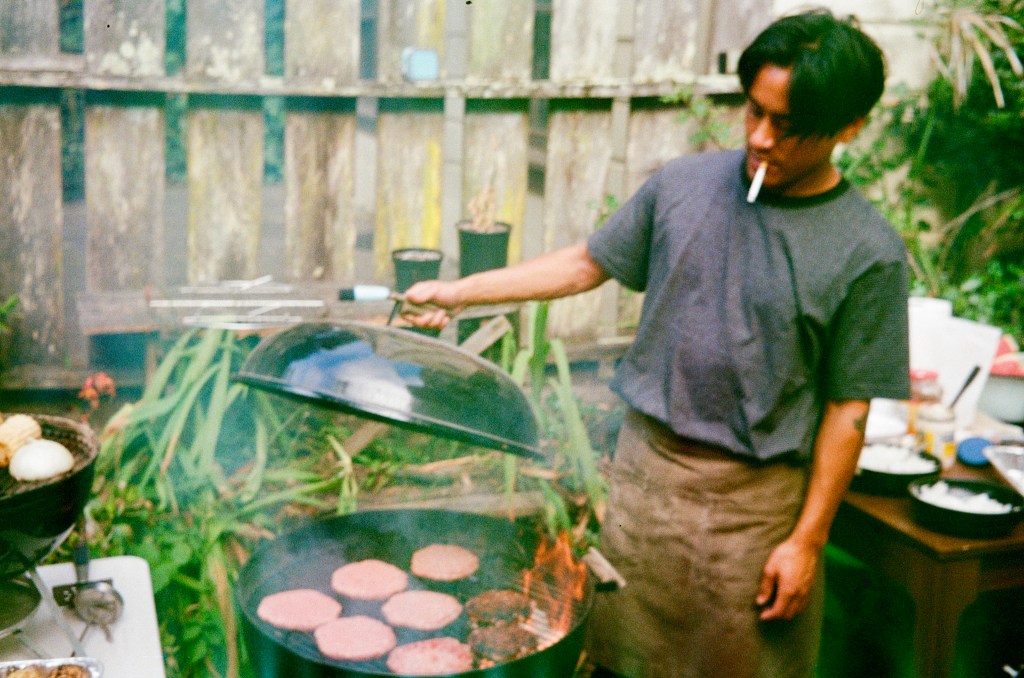
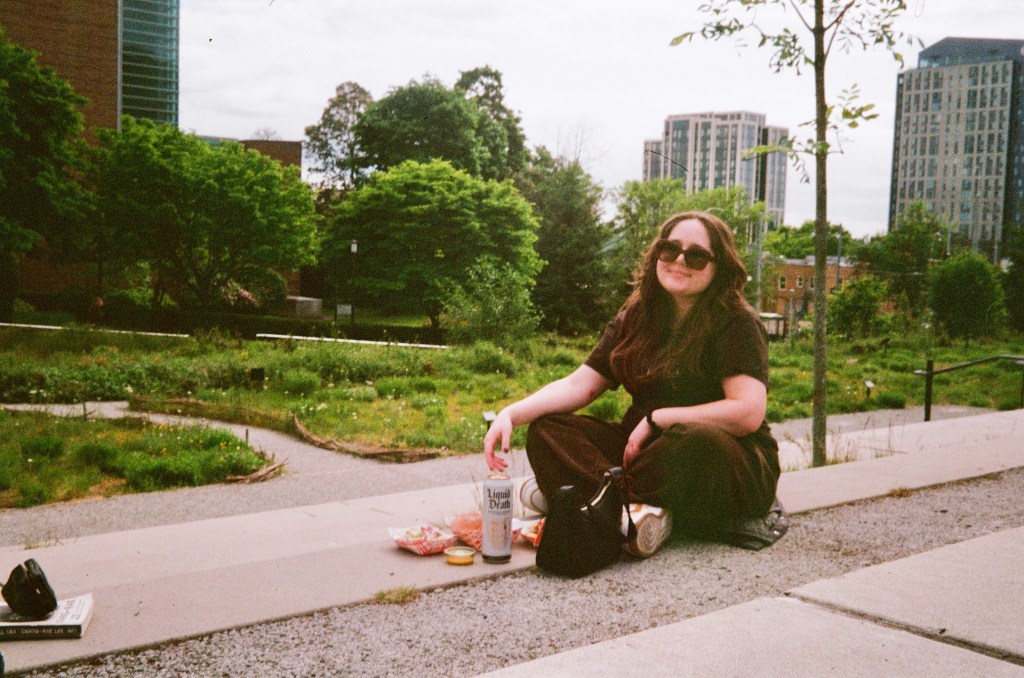
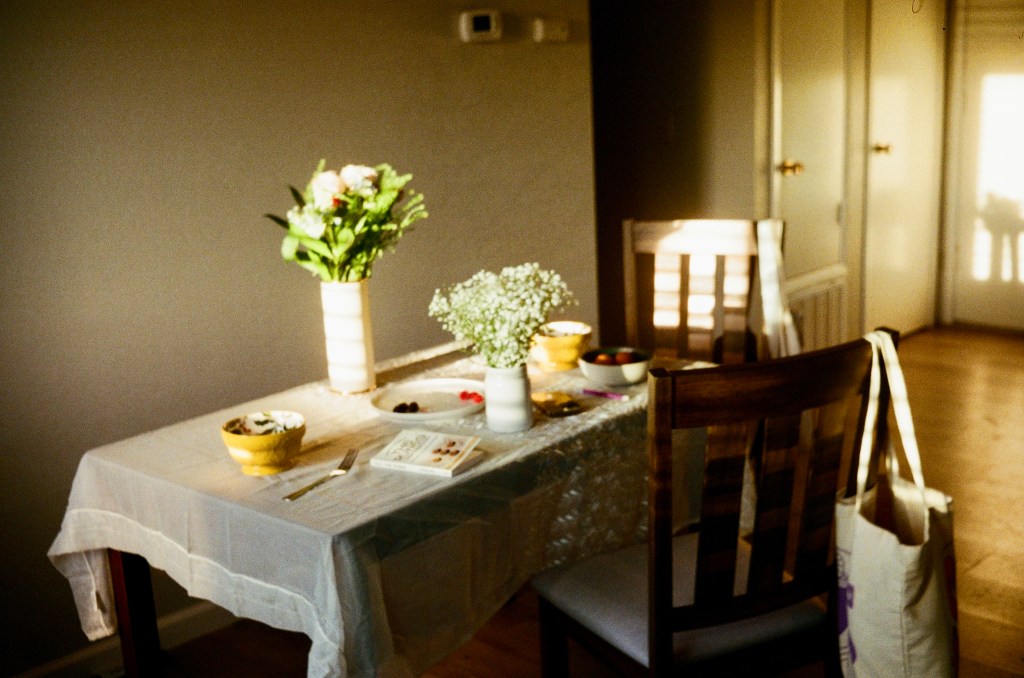
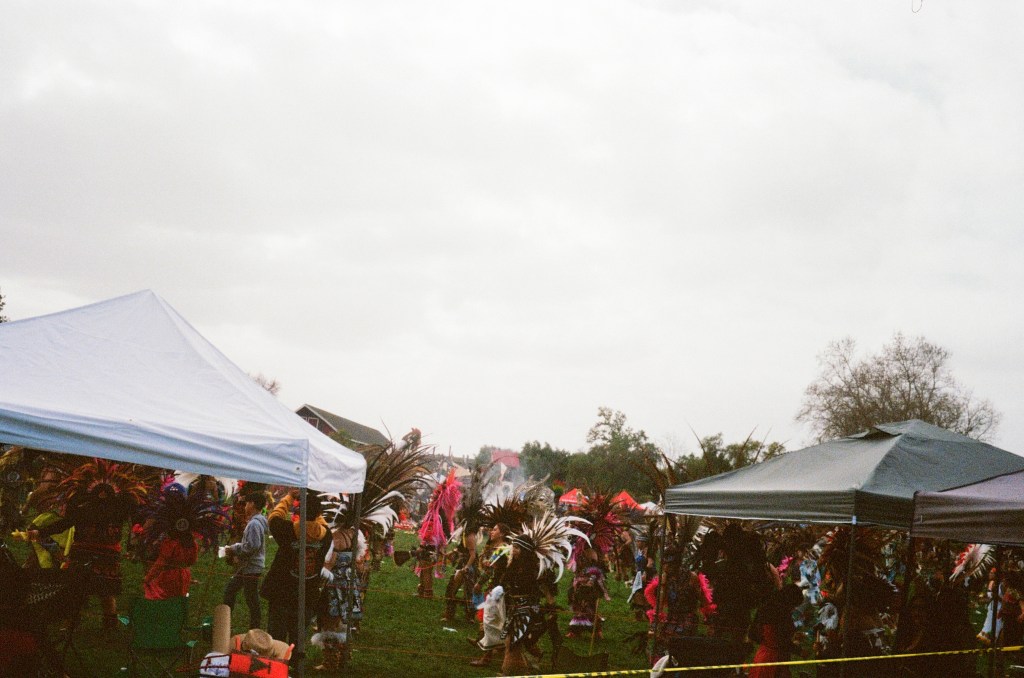
    This year I bought a point and shoot film camera in the hopes it would encourage me to bring it more places and take more pictures. Thankfully, it has. Here are some of my favorites from the roll I just had developed. Shot on Kodak Ultramax 400.

  • 04.09.2025 | Personal Update

    This last week I went to two shows, my first two of the year. I don’t think I could tell you the last time I went that many months without seeing live music. On top of having just loved going to shows since I was a teenager and thus attending as many as possible for a long time, from age 17 until last year I was also an active performing musician and show promoter at various DIY venues. The first show of the two was a DIY show in San Jose, and while I wish I could say I felt exalted upon entering the venue to a blast of sound and crowd of people, my initial reaction was light annoyance as I remembered the difficulties that come with this type of venue; in this case, a space not designed for live music that did not have a raised stage or professional sound system. The energy in the crowd, however, was nothing short of ecstatic. In addition to Star 99 (San Jose locals currently on a winning streak) and Sunday Cruise, who were on tour together at the time, were Shinobu, a San Jose-based emo-indie-punk band that was active in the 2000’s and early 2010’s before disbanding in 2015, and Ging Nang Boyz, a Japan-based band that has also been active since the 2000’s and who Shinobu managed to get to come to the U.S. to do this reunion tour with them. My partner and I, both on the shorter end of 5 feet tall, looked for a spot where we could see at least some of who was playing and settled in for the first set of the night. When we arrived Sunday Cruise was a couple songs into their set it seemed, and once I accepted that I wasn’t going to actually see much of anything I remembered part of what I’ve always loved about this type of show. I had not heard of this band before outside of knowing they were touring with my friends and hadn’t listened to them before the show and I instantly loved their sound which was a mix of indie rock and elements I can only describe as No Doubt-esque and could just feel how excited they were to be playing. Having just written my piece about a disappointing show experience where I felt the musicians played perfectly but performed poorly, this got me in the mood. I forgot how fun it can be to see a band you’ve never heard of play in a hot, crowded room.

    This isn’t a show review. I don’t know why I feel the need to clarify that but it isn’t; it’s more a show-appreciation than anything. Something that struck me during Sunday Cruise’s set was that this huge crowd of people, most of whom came to see Shinobu, Ging Nang Boyz, or Star 99, crowded in and gave this band they had likely never heard of their full attention. Of course there were people in the back talking but not in a way that felt disrespectful of the band playing, a problem I’ve been having at shows lately as a lot of people seem to have never learned basic concert etiquette. Their set ended and the crowd spread out as folks went to buy merch or use the bathroom or smoke before Star 99 went on. I fucking love Star 99 and their new album (EP?) Gaman is already one of my favorite releases of the year, so despite them actually being the last band I had seen at the end of 2024 I was stoked to watch (or listen) to them play the new songs now that I knew them. Shinobu I had gotten to see several times around 2012-2013 and had split while I was living in New York so it was very special to get to see them again after so long and to see them play some songs from 10 Thermidor which had come out also while I was on the East Coast. People went WILD. I honestly couldn’t see a thing apart from the occasional glimpse of Mike Huguenor’s face but I didn’t need to because the crowd was plenty entertaining. Everyone was shouting along, a mosh pit opened, someone crowd surfed, it was incredible. Regrettably I didn’t stay for all of Ging Nang Boyz’s set due to being a working stiff but we watched the first few songs of their set and it was amazing. Despite not being able to understand most of their lyrics since they’re sung in Japanese I could feel the emotion of the songs through the presence of the singer, whose frontman game struck me even with my limited view of him, and the passionate mastery of the whole band. The next day I felt energized in a way I hadn’t in a while, despite also being tired from getting very little sleep before having to get up and commute to work. I forgot about that part of live music, how being in that space with community sharing this experience of artistic expression is exhilarating even when it’s physically exhausting. It made me miss performing with my band Practicing Sincerity, who played our last show last summer. I’ve been loosely working on more music but I don’t have anything ready to play for people yet.

    From the age of 17 when I started playing shows until last year I had played in front of people pretty consistently, with the biggest gap being the year I moved to New York and only played one show that hardly feels like it even counts (my friend had to back out of a show so he offered me his set and I scrapped together some old material just to take the opportunity; three people came). Taking a break from performing was a very intentional choice I made when I decided to stop the band, but honestly it’s been hard. It was an important outlet for me through many seasons of difficult times and a constant in my often chaotic life. Practicing Sincerity in particular was deeply formative for me, maybe I’ll write a proper retrospective on it for this blog at some point, but it was the first time I wrote songs that were explicitly about my life and my feelings. I was in a period of my life when I was struggling with severe depression and self-loathing, and I was able to channel those feelings into songs about grief in the face of death and relationships ending, about romantic love and friendship and trying to be better and sometimes failing. Playing these songs for people, strumming my guitar turned up loud and shouting lyrics into a microphone while my friends backed me up on guitar, bass, and drums was a magical experience; a moment when the walls I normally had up around myself would fall and I would give my whole self to the music and to the audience. Multiple people who knew me well told me they felt like they only got to see me fully when I played, like I was letting them into a part of myself that I couldn’t outside of that experience. By the end of things last year that had changed to some degree, but I do believe there is a part of myself I can only express in music and in performance, and so with whatever I do next I want to be very intentional about it and make sure it feels true to who I am now, not who I was years ago.

    The second show I went to, that Friday, was Spellling in San Francisco. I had seen Spellling back in 2022 in Santa Cruz and it had been a very healing experience that I desperately needed at the time so I jumped at the opportunity to see her again playing a new album. The opener was a two-piece band called Whine playing instrumental heavy metal and we arrived in the middle of their set. It was loud as fuck. We went to the merch table to buy Spellling merch and had to yell just to barely be heard, then we found a spot in the crowd where we could see decently (god bless venues with raised stages). The guitarist had a Palestinian flag hanging from their amp, which was at least as tall as them and in the center of the stage between them and the drummer. It took me a song to get into the music but once I allowed myself to settle into the space and take a few hits from my pen I got immersed in the density of the sound, the raw power of it. It was a daring choice of opener for an audience of mostly indie rock listeners but it really paid off and set the perfect tone for the show, one of entrancement. After a break Spellling came on, and instantly she had the crowd’s full attention. I’ve seen a lot of musicians try to play themselves off as mystics of some sort (see: the freak folk scene of the 2000s and Alex Ebert) but Chrystia Cabal might be the first one I’ve seen genuinely give me that impression without seeming to try for it. She doesn’t come on stage wearing a big robe or face paint or anything like that, she comes out in low-rise pants and a mesh top with her face perfectly contoured. And she doesn’t lead the crowd in prayer or have them close their eyes in silence, her presence and her voice just transport you to this otherworldly space. Throughout the set she switches between playing synth and dancing while she sings, and in both states she is absolutely mesmerizing. Spellbound is the best word I’ve found to describe the feeling in the crowd, just a genuinely mystical, beautiful experience. 

    Spellling has been on my mind a lot as I think about what music I want to make and what kind of performer I want to be. I find myself relating less and less to the nonchalance of much indie rock, which often lends itself to a kind of indifferent attitude even when the people playing it are passionate about it. I think there is a changing tide in music right now, where people are getting sick of ambivalence and leaning more into drama and genuine expressions of direct desires. I’ve seen multiple YouTube videos talking about this in conjunction with artists like Doechii and Tyler. The Creator but I think it’s also happening in rock music and across the arts. Especially now in the wake of emergent fascism and widespread hostility towards vulnerable people, people have big feelings and want big personalities, like the larger-than-life personas of figures like Chappell Roan. I don’t think you necessarily have to be extravagant and showy to accomplish this. Sometimes this can be done by a single person playing a single instrument or a frontperson who leans fully into stoicism. I know this is what I have been gravitating towards lately, and I want to find this in myself as I look for my next music project and work on new material. I want to find that larger-than-life part of myself and let it express itself, because sometimes that feels more human than singing about changing your bed sheets. 

  • 03.26.2025 | Black Country, New Road and Understated Forms of Anti-Intellectualism

    Near the end of 2022 I stumbled upon a band that instantly caught my attention. I was playing Spotify’s post-punk editorial playlist at work and heard a song that sounded like nothing else on the queue. The voice sounded like a post-punk vocalist with all the deep vibrato but was delivered with more vulnerability and emotion than cold determinism. The instrumentation carried a similar cadence and rhythm to the other artists but was almost entirely played on strings and woodwinds. The song was “Chaos Space Marine,” and the artist was Black Country, New Road. I took note of this and continued with my work. Then, later in the playlist, another song of theirs played. This one was much slower, musically less similar to the rest of the songs playing. “Concorde” was the song that got me to get out my phone and find the album, Ants From Up There, and save it in my library. I tried playing the album at work but there were too many quiet parts to be heard properly (I work with heavy machinery) but what I could hear was so unlike anything I’d heard before that I knew I needed to give it a proper listen on my headphones in an environment where I could give it more of my attention.

    There are albums that, as soon as you hear them, you know are going to change your life. A feeling you get, an internal shift in how you experience the world and music, in how you feel in your body and spirit. For me, these are albums like In The Aeroplane Over The Sea, The Execution Of All Things, The Monitor, albums filled with raw emotion that you as the listener cannot help but be immersed in. Ants From Up There, BCNR’s second studio album, is one of those albums for me. Being the person I am, I had to look into it. I learned that it was, similar to Aeroplane or The Monitor, sort of a concept album. Where Aeroplane centered around Anne Frank and The Monitor around the Civil War, Ants From Up There used the short-lived supersonic passenger plane Concorde as its central analogy. AFUT, like The Monitor, is at its core a breakup album. Unlike The Monitor, however, it is a distinctly un-bitter album. Where The Monitor is full of Titus Andronicus lead singer and songwriter Patrick Stickles screaming at the top of this lungs about feelings of worthlessness and hatred in the face of being cheated on and disposed of, BCNR frontman Isaac Wood sings with unparalleled passion and vulnerability, but there is no real animosity in his voice. He sings about feeling distant from a person who is right in front of him, that feeling of knowing someone has moved on from you while feeling unable to do the same, and watching them navigate the world without you as you try to hold onto them. It is heart-wrenching and unflinching in its depictions of despair and longing, but it never feels angry to me, and at the end of 2022, this was exactly what I needed. I connected with this album on a deep level, and it immediately changed my world. I was in a creative rut and it gave me a new way to think about music and lyrics. I was more depressed than I had been in years and it gave me a perspective that didn’t seek to erase that but to frame it in a different context. It made me feel less alone at a time when I felt isolated in a way I hadn’t really felt before. It was a life raft the world threw to me when I was drowning, and I held onto it for dear life. Even as of writing this in 2025, I consider this album to be one of my favorites of all time and one of the best albums of the 21st century.

    One of the first things I learned looking into this album, along with the concept album bit, was that the singer Isaac Wood had left the band abruptly, within just a few days of the album being released to critical acclaim. There is something romantic to me about a piece of art so vulnerable and introspective that the artist feels they need to back away after making it, much like Jeff Mangum disappearing from the music world after Aeroplane blew up. It deepened my emotional investment in the album and the influence it was having on the art I wanted to make myself. Of course this meant Wood would not tour the album with the band, and the band announced that they would not tour at all as they didn’t want to replace him or to sing these songs that were so uniquely his themselves. At some point months later they announced a handful of shows and clarified that they would be playing all new material. Then, in 2023, they released a concert film called Live At Bush Hall, where they played these new songs in front of a live audience of their devoted fans and friends. The venue is turned into a sort of late 80’s/90’s prom, with the band and audience dressed accordingly. Rather than bringing on a new frontperson or having a band member become the lead singer, they each take turns in the lead singing songs each of them wrote. I watched this video as soon as it came out, my expectations set higher than I would have wished, and I was spellbound. While none of them attempted to take up the kind of space that Isaac Wood did, they each had a distinct presence as they sang their respective songs in their respective lyrical voices. A little while later they released this as an album, and I put it on constant rotation. The songs covered a fairly wide breadth of subjects and feelings, ranging from the importance of friendship to feeling like you gave your best self to someone who is now gone and not knowing what that means for you now. They then announced a U.S. tour where they would be playing this material, and I bought tickets the moment they went on sale. 

    A few weeks before the show a venue change was announced, moving the show from Great American Music Hall to the Regency Ballroom in San Francisco, to accommodate higher demand than anticipated. I was excited. I had recently seen Japanese Breakfast at the Regency and felt that its operatic atmosphere would be perfect for the dramatics of Black Country New Road. When I got there and got inside I swiftly made my way to the merch line to see what they had and try to snag something before the show started. They had a few T-shirts and hats and bags, all with prints on them that looked… almost intentionally bad. The main one I remember was an illustration of a pickup truck jumping a dirt ramp, printed on a trucker hat like the ones popular in the 2000’s. I scoured that merch table for anything I wanted even a little and came out empty. I was disappointed but tried not to let that affect my mood for the show. I’ve seen Animal Collective about 6 times since their 2009 Merriweather Post Pavillion tour and have found I think 1 piece of merch I actually liked and wore out. So, I grabbed a drink at the bar and headed into the show space to find a spot. I didn’t feel a need to be front and center, especially among a crowd of people about 10 years younger than me, so I found a spot on the side where I had a good view of the stage. After an opener played, the members of BCNR walked onto the stage as the crowd closed in and cheered and the lights dimmed. The members walked onto the stage to take their places, but instead of standing in a band formation near the front of the stage they formed a V shape with the opening towards the audience. I was confused, and a little put off. For one, this formation made it specifically difficult to see them from the side of the stage. Again, trying to not have these aesthetic things ruin my experience, I accepted that this was weird and moved on. Or, tried to. They opened with “Up Song,” the opener from their live album, and played their way through every song they had as this new group (according to them). For every song I looked for who was singing since that’s who I usually mostly focus on, but it was surprisingly hard. No one really physically indicated that they were singing in any noticeable way. At this point, I accepted that I was disappointed in the experience. I stayed and tried to at least enjoy hearing the songs played live and focus on that experience. They played and sang the songs perfectly, which unfortunately did not help, and they played a couple of new songs that were probably good but failed to make me more excited about being there. When the lights came back on I left quickly and walked the few blocks to my car. I thought about why they would set themselves up that way, starting to form theories in my head, and then after getting on the highway decided I needed to listen to Ants From Up There and blasted it all the way back to Santa Cruz where I was living at the time.

    I was kind of shook by this experience. For 5 years I booked several DIY shows a month and rarely if ever did I find a band’s performance “disappointing.” Bad? Hackneyed? Yes, repeatedly. But even the least proficient bands usually played with heart. I’ve watched singers ham their way through uncreative lyrics and many stoic talk-singers take themselves way too seriously but they at least felt like they were giving some form of performance related to how they wanted the music to be conveyed, and that was when something clicked. I started thinking about performance, about what makes a performance (yes I think these painfully pretentious things to myself don’t at me), and about the Black Country New Road show. The more I thought about it, the more I felt like that was what had been missing; performance. They played the songs, so technically they performed the songs, but did they give a performance? I had had the thought when I was leaving the theatre that it felt in spirit more like a school band recital than a rock-adjacent concert and now I was understanding why. There is a vulnerable element to performance, as a performer you open yourself up to your audience with how you carry yourself and communicate. Even if your stage persona is stoic and unemotional, that conveys something to the audience about the music they’re listening to and the artist they’re watching. By setting themselves up in that V formation away from the audience, it felt like they were intentionally removing that element and protecting themselves from that vulnerability, which in many cases in music would be fine and appropriate but considering how vulnerable and emotional their songs are this was not one. I fell in love with this band because of the raw emotion in their lyrics and music and I went to that show to see those songs played with emotion, not because I needed to know what their violin sounds like through an SM57 over house speakers. It felt almost like an anti-performance, an idea I’m willing to entertain despite thinking is pretentious even for me. Why else would they set the stage up like that? In the Live At Bush Hall video they are arranged more like a rock band, with the drummer in the back and the others spread around the front of the stage, and that felt genuine. The only real reason I could come up with was this anti-performance idea, until I started thinking about the age group the band members and most of its fans are in. 

    I don’t like being one of those people who’s always finding ways to complain about the younger generation. I think there are lots of good reasons the older generations historically disagree with the younger that are not the fault of the youth, and I remember when Millennials were being talked about like the four horsemen of the apocalypse for things as dumb as not eating at Applebee’s or for preferring craft beer. But, as someone who pays a lot of attention to culture and how it shifts over time, I can’t help but be critical of some of the trends I see emerging in Gen Z. Anti-intellectualism is a social trend with real consequences that we are now experiencing in real time as a population fed up with being told to embrace a complicated world has elected a fascist idiot who only had to promise them that the world is actually simple and he would eradicate all the complications from view. I don’t think BCNR’s anti-performance is necessarily anti-intellectual, but I think it’s rooted in an adjacent problem, and this was confirmed for me recently. An offshoot of anti-intellectualism I’ve seen dominate online spaces is this notion that intellectualism as we know it is a tool of patriarchy and thus it is anti-feminist to expect people to engage in it. There is, of course, some truth to this. Academic curricula are overstuffed with white male names and a few women often relegated to a sort of tokenism or “alternative” viewpoint, reinforcing the male perspective as the standard. To be a feminist in an intellectual space is to recognize this. However, it is one thing to see this and say “I am going to de-center male perspectives” and another to say “To expect me to engage with male perspectives is sexist.” The latter is what I have been seeing a disturbing amount of online, and while this would be troubling enough on its own, the majority of people I see touting this philosophy also seem to be entirely uninterested in seeking out non-male perspectives within intellectualism. Rather than trying to reinvent intellectualism in a non-patriarchal framework, they have rejected intellectualism altogether without actually replacing it with anything. This phenomenon I believe is connected to what I view as a rejection of leadership itself. In the interest of keeping this article to a length I will actually finish writing and you will hopefully finish reading, I will sum it up as this: Leadership is inherently hierarchical, and hierarchy is inherently patriarchal, and therefore; leadership is inherently patriarchal. This anti-leadership mentality, that I view to be rooted in anti-intellectualism, is what I saw in that BCNR concert. That was really the only satisfying motive, conscious or unconscious, I could find for the way they refused to have anyone in the front of the stage acting as the center of attention in any given moment.

    After my disappointing experience at their concert, I stopped listening to Black Country New Road for a while. It was hard to separate my feelings about their anti-performance from the music. Then, earlier this year, they released a new single and announced a studio album. Before I could actually listen to the single, called “Besties,” I ended up reading pieces of an interview they did with Pitchfork, who had given glowing reviews to all of their prior releases. The interview, unfortunately, affirmed what I had been thinking. In it, one of the members talks about how Ants From Up There was distinctly a “man’s breakup album” and that this album was going to be decidedly not that. As a non-man who related profoundly to that album, this was hard to read. For one, I didn’t think it was a particularly masculine album apart from the tone of Isaac Wood’s voice and the fact that the album is written in his perspective. I didn’t read the whole article, since I was getting frustrated the more I read and was at work anyway, but when I got in my car I immediately played “Besties” and tried to give it a fair shot. It’s a short song in relation to most of their others, and thematically it was definitely aiming for what had become their most popular song, “Up Song,” also a short one. Musically, I spent the 3 or so minutes listening to plucky piano playing and chipper vocals, waiting for the song to shift into something that felt substantive, and for a moment I thought it was coming, as the rest of the band comes in with a string crescendo and drum kit, but then it settled into what it had been doing before and then ended. I almost couldn’t believe it when the song ended and the next song on my queue played. It sounded like something that would have played in a Target commercial in like 2014; this vaguely indie upbeat piano song about how great it is to be with friends. This really cemented for me the idea that they had decided against having a front-person on ideological grounds. They were trying to distance themselves from the version of the band that had released Ants From Up There not because they artistically felt like taking a new direction, but because they felt a need to noticeably reject any perceived patriarchal presence in their image. Furthermore, this new and profoundly un-challenging sound of theirs felt like an extension of this mindset. There is an inherently intellectual element to an album like Ants From Up There. Beyond the layers of historical and pop culture references that make it feel like the lyric sheets are riddled with footnotes, the music itself demands your attention. There is dissonance and dynamic tension, there are long slow drawls, and a singer whose voice won’t loosen its grip on you even when it softens to a whisper. It is not a casual listen for a casual listener, and the fact that anything from it made it onto a major playlist would be a miracle were it not for the overwhelming merit earned through its sheer compositional competency. To actively strip the music of this demanding element and the lyrics of any real substantive content to me feels anti-intellectual. Again, faced with profound disappointment over a band I loved and had high expectations of, I tried to not rush to conclusions. A week or so later I watched the music video at home, hoping it would click upon second listen in a different setting. Nope. Just “vibey” shots of young people enjoying each other’s company in a few settings. Then, feeling defeated and frustrated, I watched Live At Bush Hall again. I was a little afraid, I worried something I loved would now be tainted. Thankfully that wasn’t the case. Rather, I found myself watching a passionate band give a passionate performance of songs with thoughtful, unique arrangements and lyrics filled with stories about the complexities of relationships, be them romantic like “I Won’t Always Love You” or platonic like “Wrong Trousers.” It seems to me that somewhere between filming this concert, actually going on tour to the U.S., and recording this new album, this band of immensely talented individuals who together created something better than the sum of its parts, something that felt unprecedented and exciting, decided to dumb it down for an audience that doesn’t want to engage intellectually with what could otherwise be entertainment, to mire something that could be thoughtlessly enjoyable with “complications.”

    Maybe I’m being overly critical. Maybe I’m holding this band’s prior work too dear and have succumbed to some Millennial hipster pearl-clutching. Maybe this album is their Merriweather Post Pavillion and “Besties” is “My Girls,” a song that can feel vapid and thoughtless for a band known for challenging music and obscure lyrics until heard in the context of the album and given time to resonate. And maybe, I think more probably, this band has shifted its direction in a way that I am no longer the target audience for. Forever Howlong comes out in a little over a week and I will give it as fair a listen as I am capable of. And when it disappoints me, as I have already prepared myself for it to do, I will at the end of the day know that no matter what this band goes on to do and how I feel about it, they will have given me two pieces of art that made my life better, and that will live with me forever.